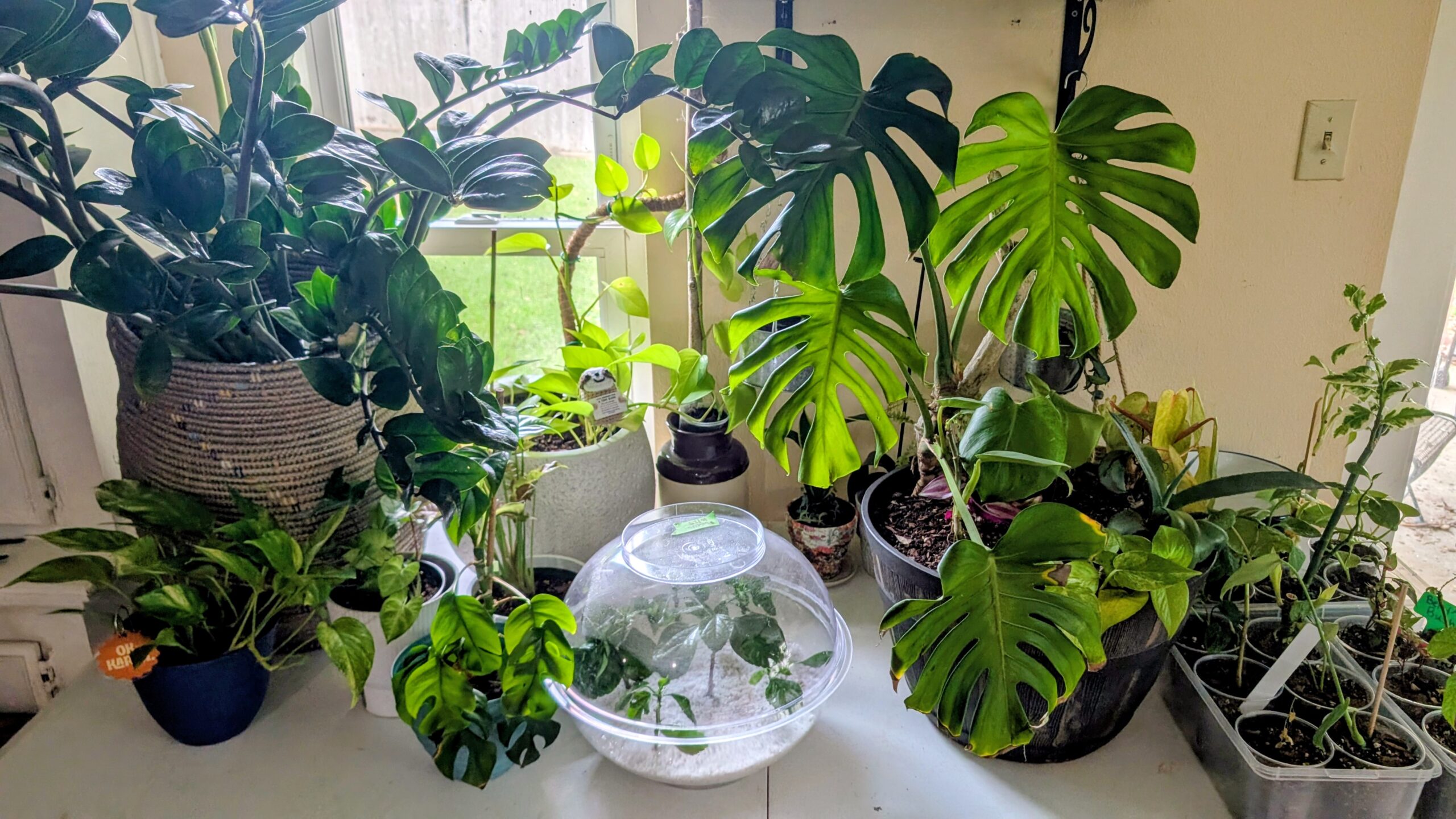
Getting Your Plants Ready for Winter
Texas doesn’t really do winter. It does surprise attacks a couple of times a year. It will be 78 degrees on a Tuesday and the weatherman will be standing there on Thursday telling you it might freeze Saturday night. The trick is not to wait for that forecast and panic. Winter prep at my house is a little each day. A few pots moved, a few plants checked, long before any freeze shows up. I keep hundreds of plants, most of them outside most of the year, and every one of them is going to need somewhere to go soon. So we start now, a little at a time, and by the time a real freeze gets here, we are already ready.
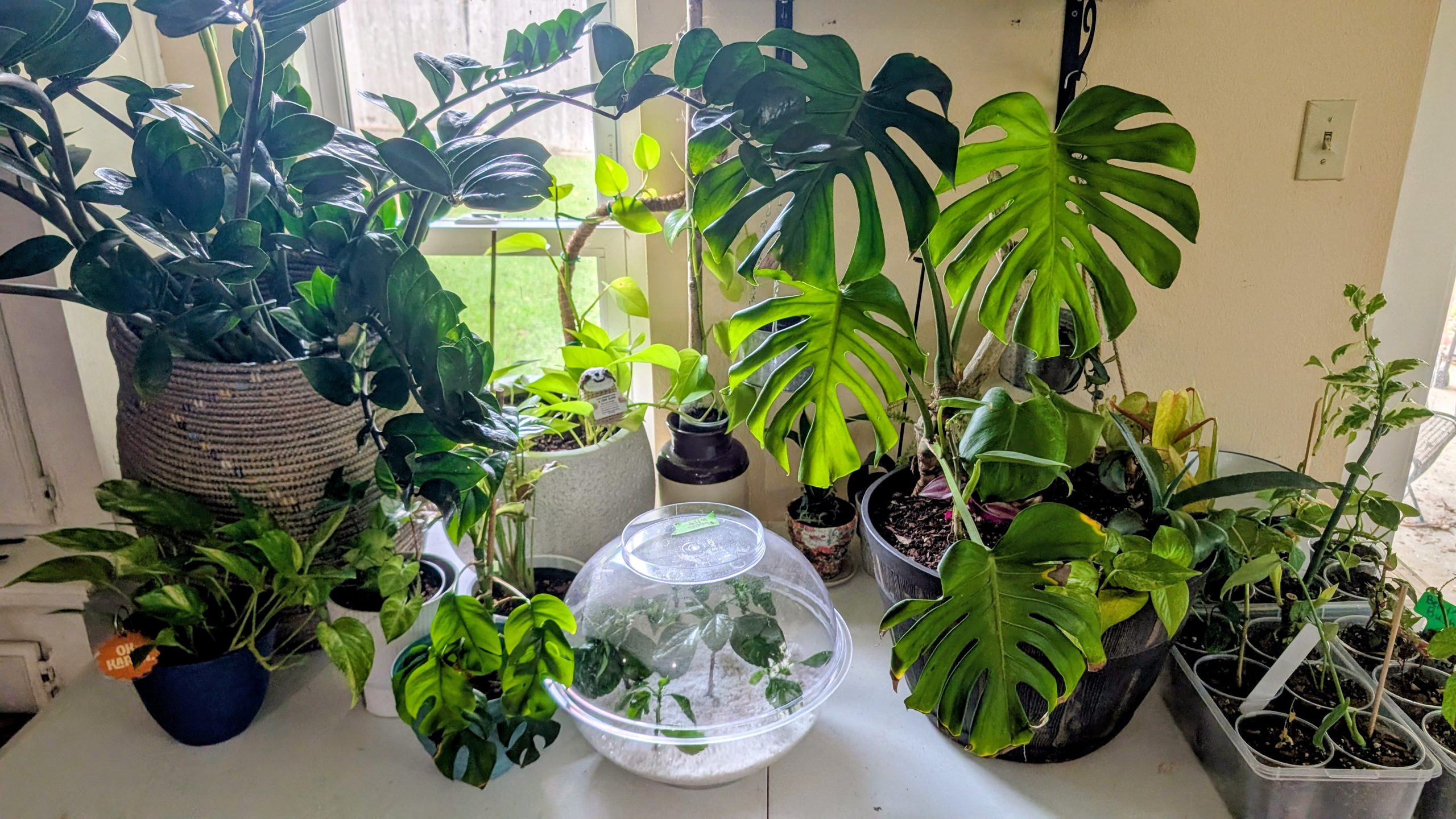
I want to preface this by saying that I am no expert. Everything I do is an experiment hoping for the best. I like to grow things from a single node, so although I have a large amount of established plants, a big majority of them are just babies an need a little more winter care than others. For reference, I garden in Zone 9b on the Texas Gulf Coast, where winter mostly behaves and then every so often it does not.
My winter goal for temps in the 50s and below:
- Propagations in the house on a prop table across from a window with heat
- Newly rooted babies in the house closer to the windows
- Established full sun plants in the house raised above tables by the windows
- Established low light plants in the house under tables by the windows
- Well established cooler weather plants in the garage under grow lights
First, know what you have and group them together. Tropical plants, and that means pothos, philodendrons, monsteras, most of the pretty leafy things we love, start getting unhappy when nights drop into the low 50s and they are in real trouble in the 40s. Most propagations need warmer temps to get started. My rule is when the forecast starts showing nights in the 60s the props come in, 50s the tender stuff starts moving , and when it drops to the 40s, everything else is on the move. Don’t wait for the freeze warning to start preparing! By then you are carrying plants in the dark in your pajamas and for some of them, it’s already too late. I say that because I’ve been there, done that. RIP my first ever plumeria.
Second, everything that comes inside gets inspected like it is trying to smuggle something. Because it is. Frogs and lizards love to hitch rides, but that one plant hiding mealybugs or spider mites in a warm closed up house in January becomes every plant having them by February. Check under the leaves. Check where the leaf meets the stem. Anything suspicious gets sprayed down outside and lives in a quarantine corner by itself for a couple of weeks. I know it sounds dramatic, but winter pest wars are for the birds.
Third, combine and consolidate while you are at it. This fall I took five or six different crown of thorns cuttings and potted them up together in one big pot instead of six little ones. One pot to carry, one pot to water, one pot to find a sunny spot for. I’ve also started combining multiple plants into large tubs. Little pots are how plants get forgotten in weird corners of a garage and found in April looking like raisins.
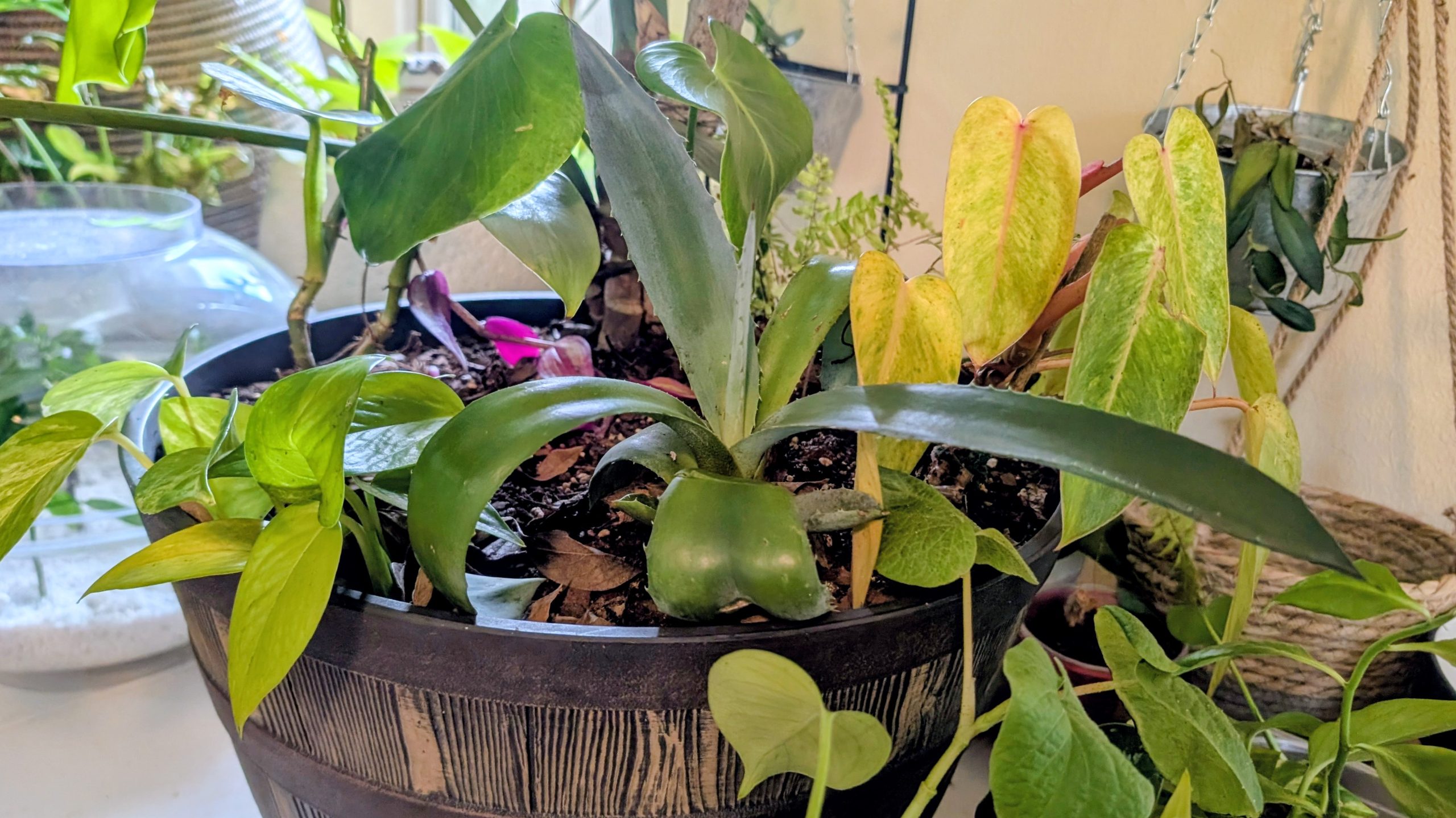
Fourth, and this is the one that saves the most plants. When they come in, water less. Not a little less. Half. Winter kills more houseplants by kindness than by cold. Cold air plus wet soil plus a plant that is barely growing equals rot, and rot does not knock. Stop fertilizing, too. They are resting. Let them.
Fifth, light becomes the whole game. The spot by the window that was fine in October can be pretty dark in December, so pay attention to the shifts in the sun. Put your sun lovers in the brightest window you have, keep the grow lights on the ones that sulk, and turn your pots a quarter turn every week or so, or you will end up with plants leaning like they are listening for gossip.
What stays outside gets the other routine. Hardy plants get pushed together, because plants huddled close hold a little warmth, same as people. Water them good before a freeze, wet soil holds heat better than dry soil. Tuck them in a covered corner where the wind is blocked, or cover them with frost cloth or an old sheet pulled all the way to the ground to trap the day’s warmth. Never let plastic touch the leaves.
That is really all winter prep is. You do not have to do it all in one cold panic the night before a freeze. Do a little each day. Know your line, move a few pots, check a few plants, and by the time a real freeze shows up, you are already ready.
